Colorectal cancer (CRC) is common—but highly preventable and treatable when found early.
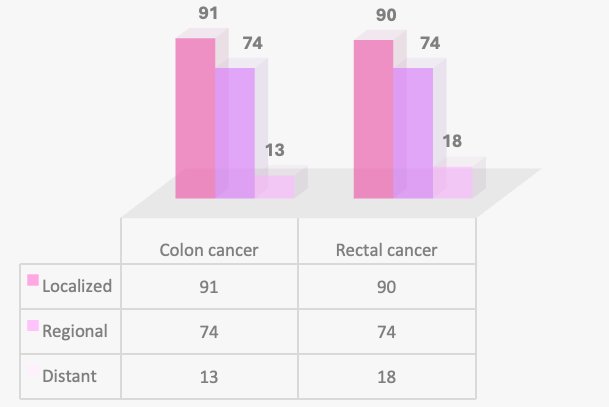
5-year Survival Rates For Colorectal Cancer At Different Stages2
Sung H, CA Cancer J Clin. 2021. 2. American Cancer Society. Survival Rates for Colorectal Cancer. 2026.
What is SPOT-MAS CRC test?
A blood test that looks for tiny, cancer‑associated DNA changes (methylation of the SEPTIN9 gene) that can be released into your bloodstream by colorectal tumors
Single Blood Tube
Requirement
PCR Mixture
Methylation Detection
Sensitivity*
0%
Specificity
0%
(*) The sensitivity for the advanced precancerous lesion (APL) group is 54.29%.
Disclaimer: SPOT‑MAS CRC is a screening blood test for average‑risk adults and does not diagnose colorectal cancer. A positive result requires follow‑up colonoscopy; a negative result does not rule out cancer or replace routine screening recommended by your clinician.
SPOT-MAS portfolio
Scope
Technology
SPOT-MAS 10
Multi-omics features of 10 cancer types: Breast, Lung, Liver-Biliary tract, Colorectum, Stomach, Ovary, Pancreas, Esophagus, Endometrium, Head & Neck
Multi AI machine learning and deep learning models
Cell-free Multi-omics ATLAS
SPOT-MAS Lung
Multiple lung-specific DNA features
SPOT-MAS CRC Pro
Multiple colorectum-specific DNA features
SPOT-MAS CRC
Septin9 gene methylation status
Multiplex Real-time PCR
Who should consider SPOT-MAS CRC?
Adults 45–75 at average risk: People without symptoms and without a significant family history of colorectal cancer who need routine screening
People who decline or cannot undergo colonoscopy: Individuals who are unwilling or unable to have a colonoscopy but still want to be screened.
Individuals between colonoscopy check‑ins: Individuals who want an additional, convenient screen between recommended colonoscopy intervals (as advised by a clinician).
Note: If you have bowel symptoms or are at higher risk (e.g., strong family history, prior polyps/CRC, or inflammatory bowel disease), talk to your clinician—you may need a different testing plan.
Gene Solutions JSC
186 - 188 Nguyen Duy Duong, Ward 2, District 10, Ho Chi Minh City, Vietnam